
Updated Feb 2026
Dealing with a Homeowners Association (HOA) doesn’t have to be a headache. While strict rules and occasional disagreements can be frustrating, you can turn HOA living into a positive experience with the right approach. Below, you’ll find practical tips to help you navigate your HOA confidently and get the most out of your community.
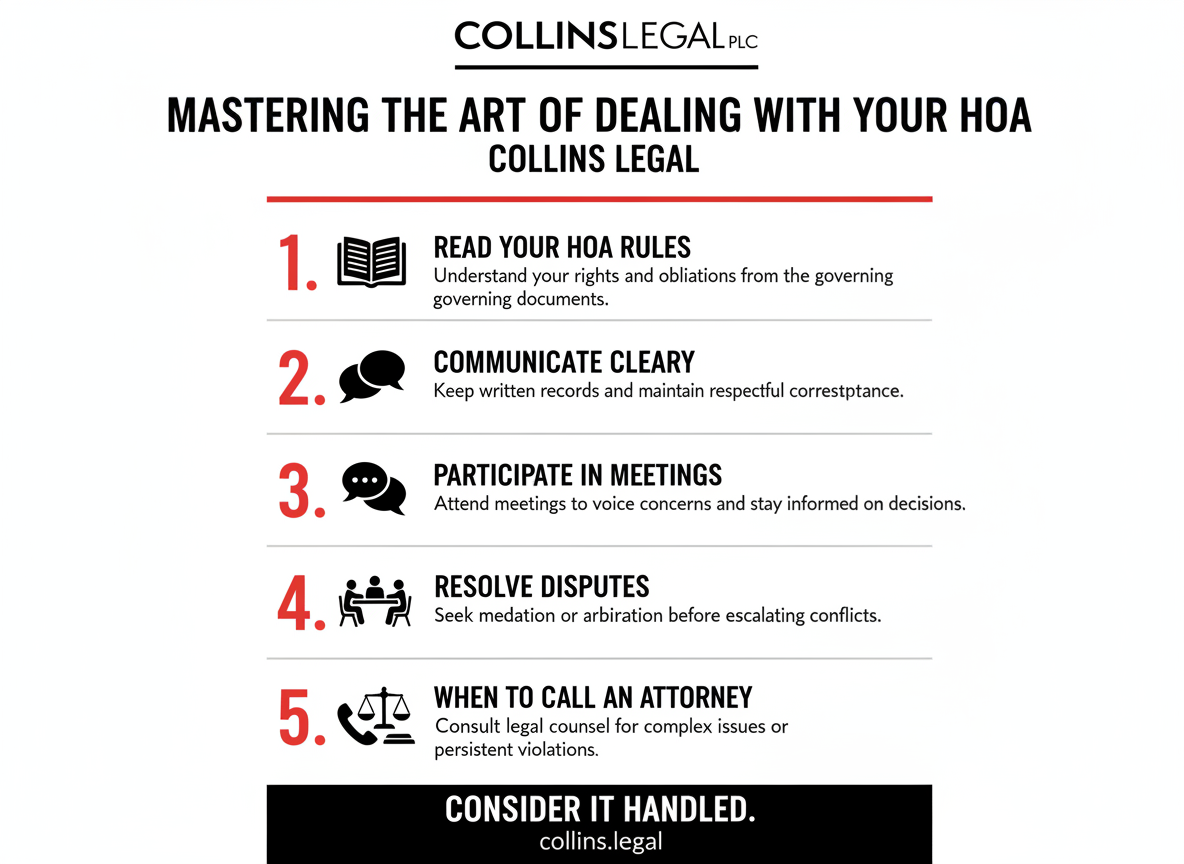
Understand Your HOA’s Rules and Regulations
Start by thoroughly reviewing your HOA’s governing documents. Don’t just skim the bylaws or covenants—read them carefully. Knowing the rules, conditions, and restrictions arms you with the information you need to avoid surprises and handle issues before they escalate.
If something isn’t clear, reach out to your HOA board or management team for clarification. They can explain the reasoning behind specific rules and help you avoid misunderstandings.
Moreover, understanding the rules puts you in a position to suggest changes. If you spot an outdated or overly restrictive policy, use your knowledge of amendment procedures to propose updates. This benefits not only you but also your neighbors.
Ultimately, your goal isn’t just to follow the rules—it’s to engage with them. Active participation cultivates cooperation and respect, key ingredients for a thriving community.
Communicate Effectively with Your HOA
Clear, respectful communication is essential. When you contact the board or management, keep your tone professional and your points straightforward. Always focus on solutions, not just problems.
When submitting questions or proposals, be concise. Written communication—like emails or letters—should include a clear subject line and a summary of your concern. This helps the HOA address your issue faster and creates a record for future reference.
For urgent or complex matters, request a face-to-face meeting. In-person discussions often resolve issues more quickly and thoroughly.
During all interactions, practice active listening. Pay close attention to responses, ask follow-up questions, and acknowledge the HOA’s perspective. Remember, board members are your neighbors too—they want a harmonious community just as much as you do.
Participate Actively in HOA Meetings
Make your voice heard by engaging in HOA meetings. First, review the agenda and minutes from previous meetings so you’re up to speed. If you have a concern or idea, submit it in advance to ensure it’s on the agenda.
During meetings, address the chairperson directly. Keep your comments brief and relevant. Respectful, direct communication encourages productive dialogue and increases the chances of your ideas being considered.
Don’t forget to vote on proposals—your input shapes community decisions. If you can’t attend, check if proxy voting or remote participation is available so your voice isn’t lost.
By preparing ahead and engaging respectfully, you help guide your community toward positive outcomes.
Navigate Disputes with Your HOA
Disputes are sometimes unavoidable. When they arise, document everything—dates, communications, and details of the issue. This record-keeping sets the stage for a clear discussion.
Start by contacting the HOA in writing. State your concerns calmly, suggest solutions, and request a meeting if needed. This proactive approach shows you’re committed to resolving the issue.
If direct talks don’t work, follow your HOA’s formal dispute resolution steps. Mediation or arbitration can often resolve problems without the need for legal action.
Stay patient and open to compromise. While it’s important to stand up for your rights, flexibility often leads to better outcomes for everyone. Keep records of all interactions and agreements in case the issue resurfaces.
Remember, the aim is to resolve conflicts while preserving the community’s peace and unity.
If negotiations break down, it’s time to consult a professional.

