
Every year, criminals move an estimated $800 billion to $2 trillion through the global economy by laundering money. But what does this process actually involve?
Money Laundering: A Serious Federal Crime
The FBI recently indicted 75 people for their roles in a multimillion-dollar money laundering and trafficking scheme. Agents seized over $6 million in cash that was actively circulating in the economy. As these defendants prepare for trial, the case raises crucial questions:
- How do people launder money?
- How much illicit money flows through the system—and why should you care?
How Money Laundering Works
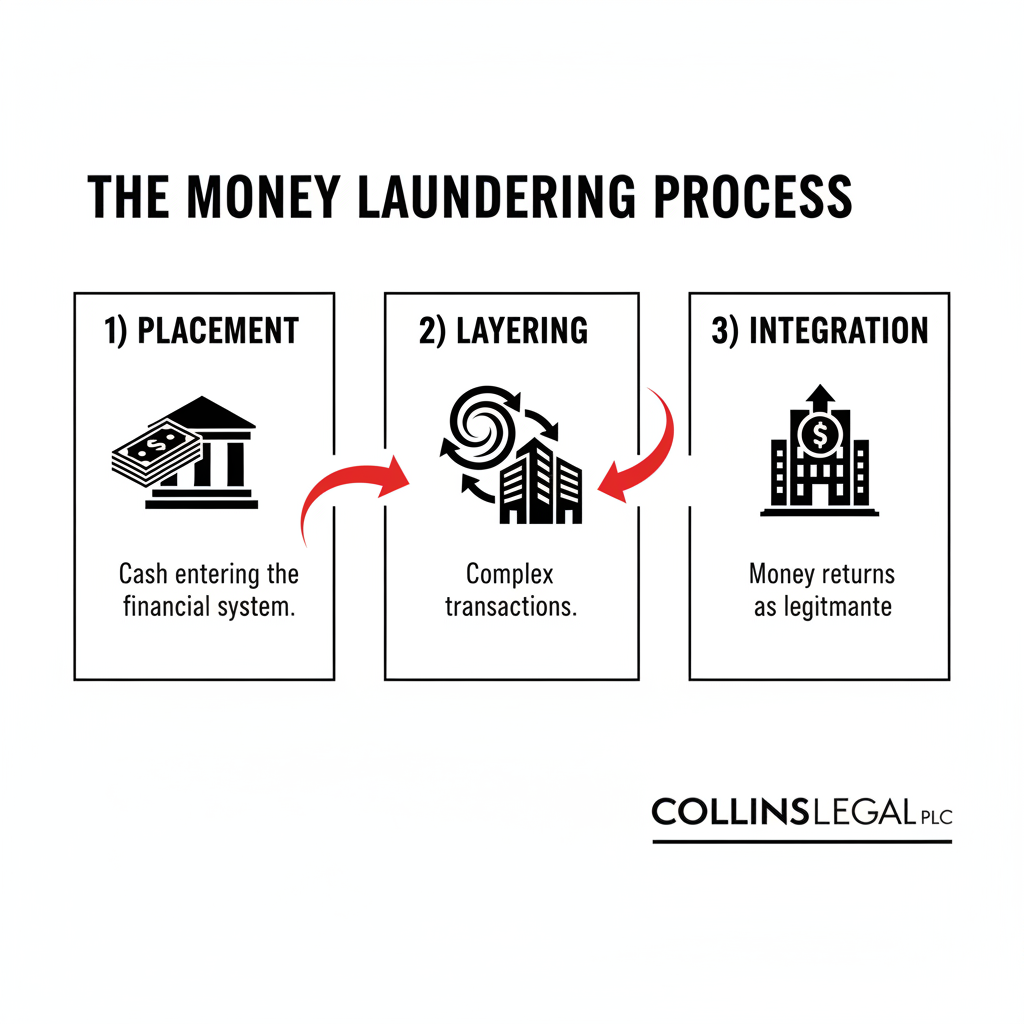
Laundering disguises profits from illegal activities and turns them into assets that look legitimate. The scheme usually unfolds in three steps:
- Placement: Criminals inject illegal funds into the financial system. With tighter regulations, launderers often use casinos or buy luxury items—homes, cars, gold—that they can later resell.
- Layering: Launderers move the money through offshore accounts or shell companies, making it difficult to trace.
- Integration: They bring the “cleaned” money back into the economy, now appearing as lawful assets or business revenue – often through cash businesses.
Why It Matters
This isn’t just a white-collar crime—it’s a growing threat. Online banking and digital transactions make it easier and faster to move illicit funds. Prosecutors often add money laundering charges to increase penalties, highlighting the seriousness of these crimes.
Facing Federal Charges?
If you or your business faces a money laundering investigation, act quickly. Collins Legal’s Criminal Defense attorneys in Nashville know how to defend your rights and protect your future.

